21 Shared Bedroom Ideas
Sharing a bedroom doesn’t have to mean cramped chaos or mismatched styles.
Whether it’s siblings, roommates, or even couples, a well-designed shared bedroom can be both functional and beautiful.
The key lies in clever space planning, personal touches, and smart design choices that give everyone their own little corner of comfort.
1. Create Defined Zones
One of the biggest challenges in a shared room is maintaining personal space. The best way to start is by defining zones for each person. Use rugs, furniture arrangement, or even lighting to visually separate the areas.
If you’re designing for siblings, place beds on opposite walls with a shared nightstand in between. For adults or roommates, use a bookshelf or partition screen to mark personal zones.
According to a 2023 survey by Apartment Therapy, 78% of shared-room dwellers reported feeling more comfortable when clear visual boundaries were established.
Personal story: when my brother and I shared a room as kids, a single bookshelf between our beds instantly ended our territory wars—it was like drawing a peace treaty with furniture.
2. Choose Loft Beds for Vertical Efficiency
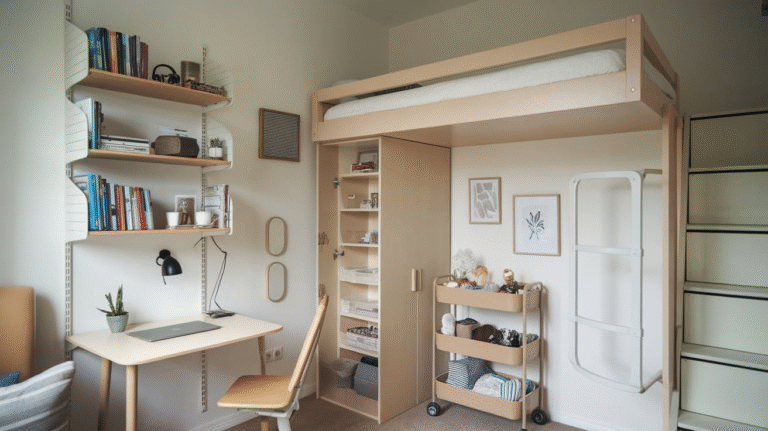
When floor space is limited, think vertically. Loft beds free up valuable square footage by elevating sleeping areas and creating room underneath for desks, seating, or storage.
Loft beds aren’t just for kids; modern designs include sturdy metal or wood frames suitable for adults, too. Add curtains under each loft for extra privacy, and you’ve essentially created mini personal zones in one room.
This setup can increase usable space by up to 35% according to IKEA’s small-space research, making it one of the most efficient solutions for shared bedrooms.
3. Use Color to Define Personal Style
Color is one of the simplest yet most powerful tools for personalization. Instead of making the room uniform, assign a color palette to each person’s side.
For instance, one could have sage green bedding and artwork, while the other goes for navy and wood tones. The trick is to keep the wall and flooring neutral so the differences feel intentional, not clashing.
Even small pops of personal color—pillows, lamps, or wall art—can help each person feel ownership over their space.
4. Add Privacy Curtains
If your shared room doesn’t allow for full partitions, privacy curtains work wonders. Hang them around beds or between zones to create separation when needed.
They’re inexpensive, stylish, and adjustable. For a cozy vibe, use linen or cotton curtains; for a modern touch, choose velvet or blackout fabric.
It’s a psychological comfort, too. Studies show that having a physical boundary—even a curtain—can reduce stress levels in shared spaces, helping each person feel more secure and independent.
5. Go for Bunk Beds with Storage
Bunk beds have come a long way from squeaky metal frames. Modern versions come with built-in drawers, shelves, and even desk setups. This design not only saves space but also keeps the room tidy.
You can customize each bunk with unique bedding, lighting, and even nameplates for personalization. For kids, add small wall-mounted organizers for toys or books—it teaches ownership and tidiness early on.
If you’re tight on space, bunk beds with under-bed drawers can replace the need for a bulky dresser entirely.
6. Use Multipurpose Furniture
In a shared bedroom, every piece of furniture should earn its keep. Choose storage ottomans, foldable desks, or benches with hidden compartments.
A bed frame with drawers can replace a separate dresser, and a wall-mounted desk can double as a vanity. According to Statista’s 2024 home design report, multi-functional furniture sales rose by 22%, especially among people living in shared or small spaces.
Think of it as functional minimalism—every item has two jobs, saving both money and room.
7. Create a Shared Study or Work Area
For siblings or roommates who need workspace, designate a shared study area. Use a long desk against one wall, with individual chairs and storage cubbies underneath.
Give each person a desk lamp or corkboard to personalize their side. This layout encourages productivity without invading personal zones.
To prevent clutter, use cable organizers and shared supply bins. Even in small rooms, this setup can make it feel like a tiny coworking space at home.
8. Add Mirrors to Enlarge the Space
Mirrors are a designer’s secret weapon for small or shared rooms. They reflect light, make the space feel bigger, and add elegance without taking up space.
Hang a large wall mirror or full-length standing mirror between zones—it visually doubles the room. Plus, it’s practical for two people sharing a space to get ready simultaneously.
Experts note that mirrors can increase the perceived size of a room by up to 30%, especially when placed opposite windows.
9. Use Floating Shelves for Personal Displays
Give each person their own floating shelf above their bed or desk to display books, decor, or personal items. It’s a subtle yet effective way to create individuality in shared surroundings.
Floating shelves also keep surfaces uncluttered—essential in shared rooms. You can even install staggered shelves for visual interest while maintaining symmetry.
This idea works for all ages—it allows personality to shine without compromising floor space or design harmony.
10. Keep a Neutral Base
A neutral base—think whites, grays, or beiges—acts as a canvas for everyone’s personality. It prevents visual chaos and keeps the room cohesive, even when individual accessories differ.
Walls, flooring, and large furniture should stay neutral, while personal items like bedding or wall art bring in color. This approach ensures the room stays flexible as tastes evolve, especially for growing kids or short-term roommates.
11. Add Personalized Lighting
Lighting can transform mood and function. Instead of relying solely on a central ceiling light, give each person their own reading lamp, fairy lights, or wall sconce.
This small change makes a huge difference. Each person can control brightness and style on their side. Warm light is great for relaxing, while white LED works better for studying or working.
And here’s a fun fact: according to lighting design experts, individual task lighting increases productivity by 16% compared to shared overhead lighting.
12. Use a Room Divider for Visual Privacy
If space allows, a folding screen or room divider can add both privacy and style. Choose something lightweight and flexible that can be moved when not needed.
There are endless options—woven bamboo for a natural look, acrylic panels for modern appeal, or even DIY fabric dividers.
Dividers also serve as design elements, breaking monotony while offering functionality. It’s like creating small private cabins inside a single room.
13. Add Under-Bed Storage
When two people share a room, storage becomes a battleground. Under-bed storage bins or drawers solve that problem neatly. Use labeled bins to keep personal items organized.
This strategy clears clutter without eating into valuable floor space. You can also use rolling storage boxes or vacuum-sealed bags for seasonal items.
Statistics show that under-bed storage increases usable space by nearly 25% in small bedrooms, making it one of the most practical upgrades for shared living.
14. Incorporate Pegboards or Wall Organizers
Vertical space is your best friend. Install pegboards, hooks, or wall-mounted organizers for accessories, stationery, or everyday items.
Each person can customize their section—one for headphones and notes, another for jewelry or art supplies. It’s practical, visual, and easily changeable.
This keeps desks and dressers clutter-free, making the room look larger and more harmonious.
15. Match Furniture but Vary Accessories
Matching core furniture (beds, nightstands, or dressers) creates balance and visual symmetry, while differing accessories add personality.
For example, identical beds with different comforters or pillows allow individuality without visual chaos. The room stays cohesive but doesn’t feel cookie-cutter.
This balance works especially well in shared adult bedrooms or dorm setups—it’s equality with a touch of flair.
16. Add Wall Art for Personality
Walls shouldn’t go to waste. Encourage each person to decorate their half with wall art that reflects their personality. It could be posters, framed prints, or even peel-and-stick decals.
To maintain harmony, stick to a common frame color or arrangement style. This keeps the design consistent even if the art themes differ.
Art gives each person ownership and makes the shared room feel more personal, less temporary.
17. Consider Foldable or Stackable Furniture
When flexibility is key, foldable chairs, collapsible desks, or stackable stools become heroes. They let you adapt the room’s layout as needed—study by day, relax by night.
Foldable furniture is particularly great for college dorms or small apartments where the room’s function changes often.
The global market for foldable furniture is expected to reach $13 billion by 2027, showing just how essential versatility has become in modern shared living spaces.
18. Add Area Rugs for Warmth and Zoning
Area rugs aren’t just decorative—they help define personal zones and add warmth underfoot. Use different rugs for each person’s area, or one large neutral rug that ties both sides together.
Choose low-pile rugs for easy cleaning, especially in kid or teen rooms. Rugs also help absorb sound, which is a bonus when you have two people sharing a small space.
19. Keep It Clutter-Free with Smart Storage
Shared rooms tend to accumulate double the stuff in half the space. Combat clutter with closet organizers, bins, baskets, and hooks.
Adopt a rule: one in, one out. If something new comes in, something old goes out. Keeping a tidy space prevents tension between roommates or siblings—it’s amazing how much smoother relationships run when everything has a place.
A University of California study found that clutter can increase cortisol levels, leading to stress. Keeping things organized isn’t just aesthetic—it’s mental self-care.
20. Include Personal Touches
Even in the most shared setup, each person deserves a few personal touches—like photos, mementos, or small plants. These little details create emotional ownership of the space.
Plants are especially effective—they purify the air and add life to the room. Small potted succulents or hanging planters look great and require minimal care.
Encourage individuality without overwhelming the space. The goal is harmony, not uniformity.
21. Keep Communication and Respect Central
No design trick can fix a shared space if respect is missing. Establish simple ground rules—quiet hours, cleaning schedules, and personal item boundaries.
Sometimes, the best shared-room design isn’t about decor—it’s about understanding and communication. Talk about what each person values most in their space. Maybe one prioritizes order, while the other loves cozy clutter. Finding middle ground is key.
A well-designed room fosters peace, but a respectful attitude sustains it.
Conclusion On 21 Shared Bedroom Ideas
Sharing a bedroom doesn’t have to be a compromise—it can be a collaboration. By combining smart design, organization, and personal expression, two (or more) people can comfortably share one space without friction.
The beauty of these ideas lies in their adaptability. Whether you’re outfitting a small apartment, siblings’ room, or a guest area, the goal is balance—privacy without isolation, style without clutter, and individuality within unity.
So, start small: maybe it’s new lighting, better storage, or just rearranging furniture. With the right approach, your shared room can feel less like a squeeze and more like a well-orchestrated duet—two personalities sharing one harmonious melody of space.